Small Bets, Big Shifts: Inside Canada's Micro-Staking Casino Movement
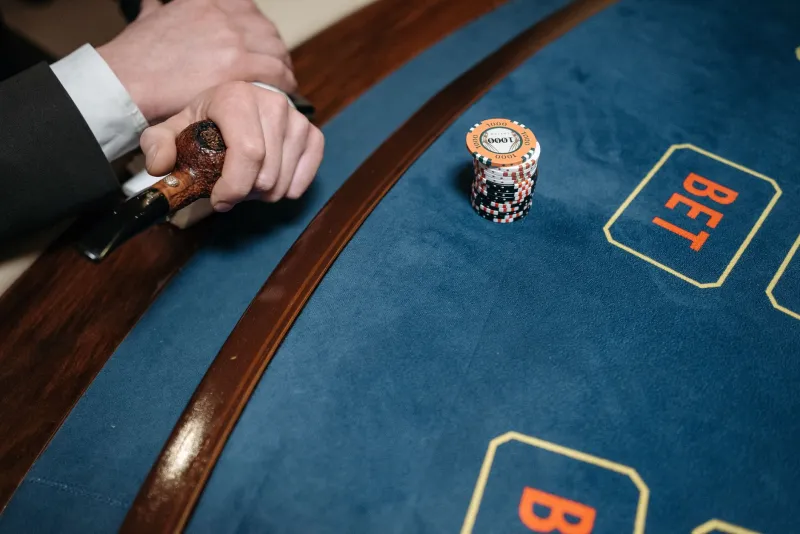
There's a certain kind of Canadian casino player who doesn't fit the stereotype. They're not chasing jackpots. They're not doubling down in a panic. They load up a slot, set their bet to $0.20 a spin, and they play for two hours — sometimes walking away ahead, sometimes slightly behind, almost always entertained.
Meet the micro-bettor. And they're more common than the industry expected.
Over the past two years, a quiet but measurable shift has been underway at Canadian-facing online casinos. Players are staking less per session, stretching entertainment budgets further, and in some cases, completely reframing what "winning" at a casino even means. It's a trend that says something interesting about where Canadian gambling culture is heading — and it raises some questions worth sitting with.
What Exactly Is Micro-Betting?
The term doesn't have a formal industry definition, but among Canadian players it's generally understood as consistent wagering at the lowest available bet increments — typically $0.10 to $0.50 per spin or hand. Some players push it further, using penny-bet options on slots that technically allow sub-cent wagers.
This isn't about being broke. Many micro-bettors are employed professionals with disposable income who've made a deliberate choice to treat online casino time as entertainment with a defined, modest budget — more like a Netflix subscription than a financial risk.
"I give myself $20 a week," says Priya, a 31-year-old marketing coordinator from Calgary who's been playing online slots for about three years. "At $0.20 a spin, that's 100 spins minimum. Sometimes I stretch it to a Friday night ritual. I'm not trying to win anything major — I just like the games."
This framing — casino as entertainment product rather than income opportunity — is exactly what responsible gambling advocates have been encouraging for years. But the reality is more complicated.
The Entertainment Argument Has Real Merit
Let's give micro-betting its fair due. When approached with the right mindset, ultra-low-stake play genuinely does change the risk profile of a casino session.
At $0.20 per spin on a slot with 96% RTP, the expected loss per 100 spins is roughly $0.80. A $20 budget can theoretically sustain hours of play, and the entertainment value per dollar is — mathematically — quite high. Compare that to a player hammering $5 spins who can blow through the same budget in under four minutes.
Some game developers have taken notice. Several popular Canadian-market slots now feature "buy feature" mechanics and bonus rounds that activate at any stake level, meaning micro-bettors access the same core entertainment as high rollers, just with proportionally smaller potential payouts.
Dr. Fiona Marsh, a behavioural researcher who has consulted for Canadian gambling commissions (and who asked that her institutional affiliation not be named), sees genuine value in the trend. "Players who set explicit entertainment budgets and stick to them are engaging with gambling in a fundamentally healthier way," she told us. "The micro-betting framing tends to support that mindset."
But Is It Actually a Gateway?
Here's where the conversation gets more nuanced. Not everyone who starts at $0.20 a spin stays there.
Anecdotally, several players we spoke with described micro-betting as an entry point — a comfortable way to explore a new casino or try an unfamiliar game before scaling up. That's fine, arguably, if the scaling is intentional and controlled. It becomes a concern when small bets function as psychological on-ramps to sessions that gradually drift higher.
The "just one more spin" effect doesn't disappear at lower stakes. Neither does the dopamine loop that casino game design is engineered to create. And some platforms have been criticized for structuring their lowest-stake games to still feature frequent near-misses and celebratory animations — the same engagement mechanics that appear at higher bet levels.
"The bet size changes, but the design doesn't," one industry insider told us, asking to remain anonymous. "A $0.20 spin can still generate the same neurological response as a $5 spin. The risk is smaller financially, but the behavioural conditioning is identical."
Dr. Marsh echoes the caution. "Micro-betting can absolutely be sustainable and healthy. But it's not a magic shield. If a player is using small bets to justify longer sessions or more frequent play, the aggregate risk can still climb."
What the Casinos Think
Here's an interesting wrinkle: not all online casinos are thrilled about the micro-betting trend, at least not from a revenue perspective.
Low-stakes players generate less gross gaming revenue per session, and some platforms have quietly raised minimum bet thresholds or steered players toward higher-stakes games through their lobby layouts and promotional structures. Welcome bonuses, for instance, often come with wagering requirements that are difficult to clear on $0.20 spins without investing enormous time.
That said, some operators have leaned into the segment. A few Canadian-licensed platforms have introduced dedicated low-stakes lobbies and adjusted their VIP programs to reward session frequency rather than raw spending — acknowledging that a loyal micro-bettor who plays three times a week is worth cultivating.
A Sustainable Alternative, or Just a Slower Burn?
The honest answer is: it depends on the player.
For Priya in Calgary, micro-betting is genuinely working. She's been playing consistently for three years, her weekly spend hasn't crept up, and she describes her relationship with online slots as relaxed and recreational. "It's no different to me than buying a crossword book," she says.
For others, the research suggests low-stakes play can gradually normalize casino gambling as a habitual activity, which carries its own risks independent of session size.
The distinction seems to come down to intentionality. Players who micro-bet as a strategy — with explicit budgets, time limits, and zero expectation of profit — tend to describe positive experiences. Players who stumble into it without a framework are more vulnerable to the same patterns that affect any casino gambler.
The micro-betting movement is real, it's growing, and in many ways it reflects a maturing Canadian casino audience that's developing a more sophisticated relationship with online gambling. That's genuinely encouraging.
Just don't assume the smaller number on your bet slip automatically makes the experience safer. Awareness still does the heavy lifting.